Speakers
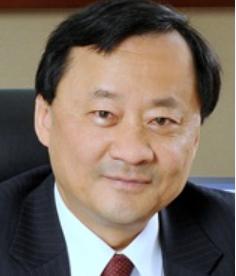
Fellow of the AAAS, ACM,and IEEE
Chinese University of Hong Kong, Hong Kong, China
Biography: Benjamin W. Wah is currently the Provost and Wei Lun Professor of Computer Science and Engineering of the Chinese University of Hong Kong.He also serves as the Chair of the Research Grants Council of Hong Kong.Before then, he served as the Director of the Advanced Digital SciencesCenter in Singapore, as well as the Franklin W. Woeltge Endowed Professor ofElectrical and Computer Engineering and Professor of the CoordinatedScience Laboratory of the University of Illinois, Urbana-Champaign, IL. Hereceived his Ph.D. degree in computer science from the University ofCalifornia, Berkeley, CA, in 1979. He has received a number of awards for hisresearch contributions, which include the IEEE CS Technical AchievementAward (1998), the IEEE Millennium Medal (2000), the IEEE-CS W. WallaceMcDowell Award (2006), the Pan Wen-Yuan Outstanding Research Award(2006), the IEEE-CS Richard E. Merwin Award (2007), the IEEE-CS TsutomuKanai Award (2009), and the Distinguished Alumni Award in ComputerScience of the University of California, Berkeley (2011). Wah's current research interests are in the areas of bigdata applications and multimedia signal processing. Wah cofounded the IEEE Transactions on Knowledge and Data Engineering in 1988 and served as its Editor-in-Chiefbetween 1993 and 1996, and is the Honorary Editor-in-Chief of Knowledge and Information Systems. He currentlyserves on the editorial boards of Information Sciences, International Journal on Artificial Intelligence Tools, Journalof VLSI Signal Processing, and World Wide Web. He has served the IEEE Computer Society in various capacities,including Vice President for Publications (1998 and 1999) and President (2001). He is a Fellow of the AAAS, ACM,and IEEE.
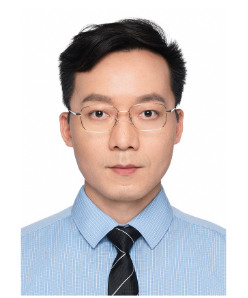
Prof. Yang HAN
University of Electronic Science and Technology of China, China
Biography:
Yang Han (S’08-M’10-SM’17) received the Ph.D. degree in Electrical Engineering from Shanghai Jiaotong University (SJTU), Shanghai, China, in 2010. In 2010, he joined the University of Electronic Science and Technology of China (UESTC), Chengdu, China, where he has been an Associate Professor in 2013, and Full professor in 2021. From March 2014 to March 2015, he was a Visiting Scholar with the Department of Energy Technology, Aalborg University, Aalborg, Denmark. He is currently with the School of Mechanical and Electrical Engineering, UESTC. His research interests include the ac/dc microgrids, active distribution networks, power quality, grid-connected converters for renewable energy systems, active power filters, multilevel converters, and static synchronous compensators (STATCOMs).
Dr. Han has received several national and provincial projects, and more than 30 industrial projects in the area of power electronics, smart grid, microgrid, and power quality analysis and compensation. He holds more than 40 issued and pending patents. Dr. Han was listed as “World’s Top 2% Scientist 2022” by Stanford University in 2022, and the recipient of the Young Scientist Award in CPESE 2021, the Provincial Science and Technology Award in 2020 and 2022, Science and Technology Award from Sichuan Electric Power Company in 2019, Academic Talent Award by UESTC, in 2017, Baekhyun Award by the Korean Institute of Power Electronics, in 2016. He has published a book “Modeling and Control of Power Electronic Converters for Microgrid Applications”, ISBN: 978-3-030-74512-7, Springer. He served as an Associate Editor of Journal of Power Electronics and IEEE ACCESS (2019-2020)
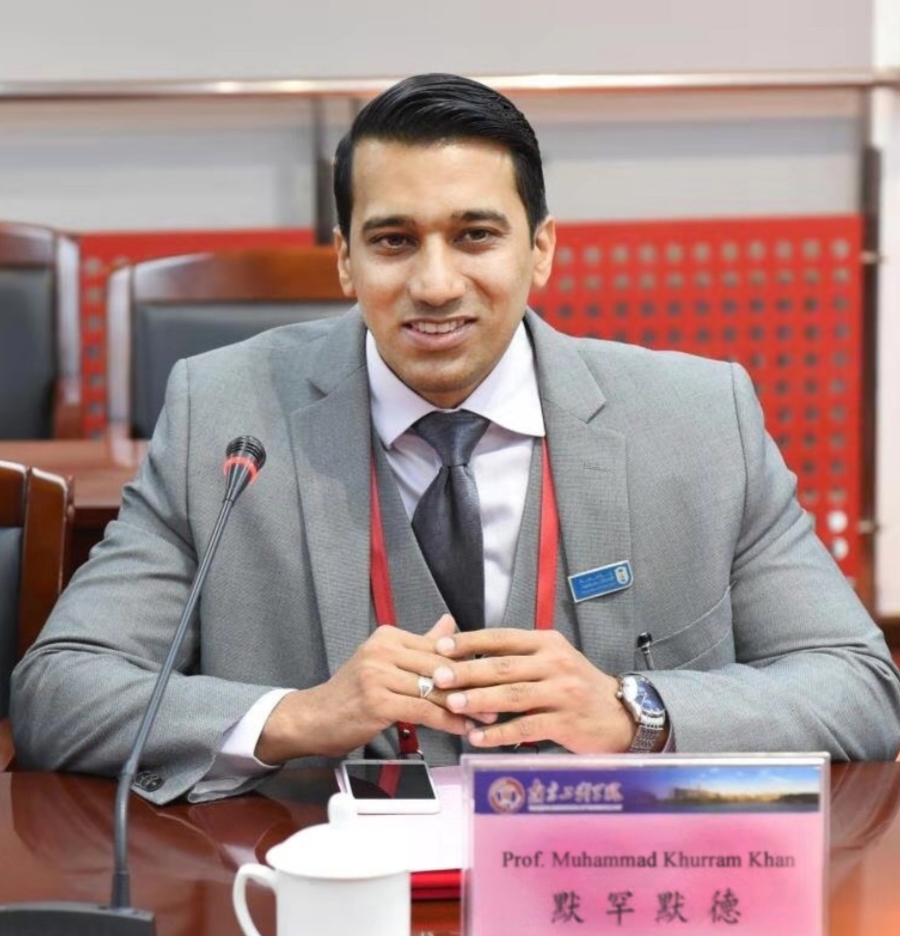
Prof. Muhammad Khurram Khan
King Saud University, Saudi Arabia
Biography:
Prof. Muhammad Khurram Khan is a global thought leader and influencer in cybersecurity. He is a Professor of Cybersecurity at the Center of Excellence in Information Assurance, King Saud University, Saudi Arabia. He is the founder and CEO of the "Global Foundation for Cyber Studies and Research", an independent and non-partisan cybersecurity think-tank in Washington, D.C., USA. He has contributed to cyber policy work for the G20 (Saudi and Italian Presidencies) in shaping a safer cyberspace for children, protecting the masses and vulnerable populations in cyberspace, and empowering and enabling women in the cybersecurity profession. In 2019, he played an instrumental role as a cybersecurity subject expert for a USD 6 million series B investment in a South Korean startup, "SecuLetter," which has received a corporate valuation of over USD 40 million (2020) with a pre-IPO valuation of USD 100 million (2022). He is an international advisory board member of AIFT (Singapore), an AI cybersecurity company, with valuation of over USD 500 million.
He is the Editor-in-Chief of a well-reputed international journal ‘Telecommunication Systems', published by Springer-Nature for over 28 years, with a recent impact factor of 2.3 (JCR 2025). Furthermore, he is the area editor (Cybersecurity) of IEEE Communications Surveys & Tutorials, which has a 46.7 impact factor in JCR 2025. Moreover, he has been on the editorial board of several journals, including, IEEE Transactions on Information Forensics and Security, IEEE Communications Magazine, IEEE Transactions on Mobile Computing, IEEE Transactions on Network Science and Engineering, IEEE Communications Letters, IEEE Transactions on Intelligent Vehicles, IEEE Internet of Things Journal, IEEE Transactions on Consumer Electronics, Journal of Network & Computer Applications (Elsevier), IEEE Access, IEEE Consumer Electronics Magazine, etc.
Prof. Khurram is an honorary professor at IIIRC, Shenzhen Graduate School, China. He is also an adjunct professor at Taylor’s University, Malaysia and Fujian University of Technology, China. He has secured an outstanding leadership award at the IEEE international conference on Networks and Systems Security 2009, Australia. He was the recipient of the King Saud University Award for Scientific Excellence (Research Productivity) in May 2015. He was also a recipient of the King Saud University Award for Scientific Excellence (Inventions, Innovations, and Technology Licensing) in May 2016. In 2025, he was awarded the ‘Lifetime Achievement Award in Cybersecurity’ for his exceptional academic and professional services to the profession.
He has published over 500 research papers and is an inventor of 12 US patents. He has edited 9 books/proceedings published by Springer-Verlag, Taylor & Francis, and IEEE. He has secured several national and international competitive research grants with an amount of over USD 5 million in the domain of cybersecurity. He has played a leading role in developing the "BS Cybersecurity Degree Program" and the "Higher Diploma in Cybersecurity" at King Saud University.
His research areas of interest are cybersecurity, AI for cybersecurity, Internet of Things (IoT) security, vehicular cybersecurity, digital authentication, cyber policy, and technological innovation management. He is a fellow of the Institution of Engineering & Technology (UK) and a fellow of the British Computer Society (UK). He is currently working as a chair of the task group (TG) of the International Telecommunication Union (ITU), a specialized agency of the United Nations on ICT, on child online protection in the Metaverse. His research has been cited over 41,500 times with an h-index of 104 (Google Scholar).
Speech Title: AI at the Crossroads: Securing Intelligent Systems in an Era of Autonomous Threats
Abstract: Artificial Intelligence (AI) is transforming modern digital ecosystems by enabling intelligent automation across critical infrastructures, smart networks, autonomous platforms, and cyber-physical systems. However, as AI becomes deeply embedded in decision-making and operational processes, it also expands the cybersecurity attack surface and introduces complex vulnerabilities. Emerging threats such as adversarial attacks, data manipulation, model poisoning, prompt injection in large language models, and attacks on autonomous agents reveal significant security and reliability concerns in AI-enabled environments. In parallel, challenges related to explainability, trustworthiness, privacy, and ethical governance continue to limit the safe adoption of intelligent systems at scale.
Despite these concerns, AI also provides unprecedented opportunities for building adaptive and resilient security frameworks. Advanced machine learning techniques are increasingly used for intelligent threat detection, anomaly analysis, automated incident response, and predictive cybersecurity defense in highly dynamic environments. This keynote discusses the dual role of AI as both a source of cyber risk and a critical enabler of next-generation security solutions. It further highlights current research directions and future challenges in designing secure, explainable, and trustworthy AI systems capable of supporting resilient digital infrastructures in an increasingly interconnected and autonomous world.